What is Bitcoin Halving?
A Bitcoin halving is a long-awaited event in the crypto world, when the reward for mining new blocks is halved. This allows to expand the total time needed to mine all 21 million bitcoins. And this feature is crucial as it helps to fight inflation and mimic the natural scarcity properties of physical commodities such as gold.
"The main reason why this is done is to keep inflation under control," — Vitalik Buterin, Ethereum creator.
The halving is not just a technical event; it's an important moment that has historically influenced Bitcoin's price and various aspects of the cryptocurrency ecosystem.
A little bit of history:
- The reward for mining started out at 50 BTC per block in 2009, when Bitcoin was presented to the public.
- In 2012, the first halving occurred, reducing the subsidy from 50 to 25 bitcoins.
- The next halving in 2016 halved the reward to 12.5 BTC.
- And the last halving in 2020 reduced the reward to 6.25 bitcoins.
As we see, halvings happen every four years, and the next one is expected to happen in April 2024. The exact date of the next Bitcoin halving depends on the mining activity and can slightly vary.
Why Study Halving History?
By examining the aftermath of the previous halvings, investors and enthusiasts can gain valuable insights into possible trends and market behaviors. The last Bitcoin halving event in 2020 caused a substantial bull market that saw Bitcoin reach unprecedented highs, underlining the significant impact halving events can have on market sentiment and valuation.
Let's look closer at the numbers.
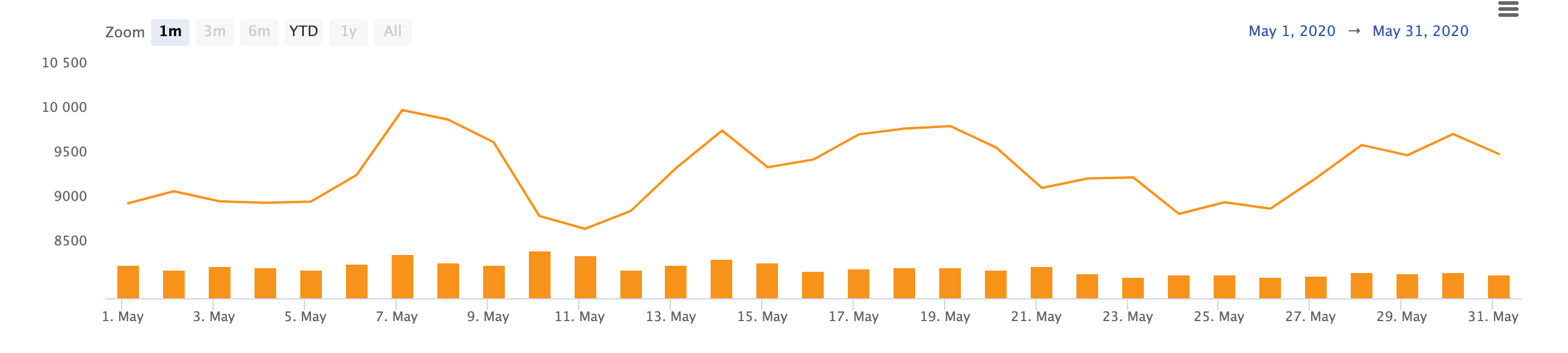
The average closing price for Bitcoin in May 2020 was $9,269. The minimum price was 8.616$ and the maximum price was 9.952$.
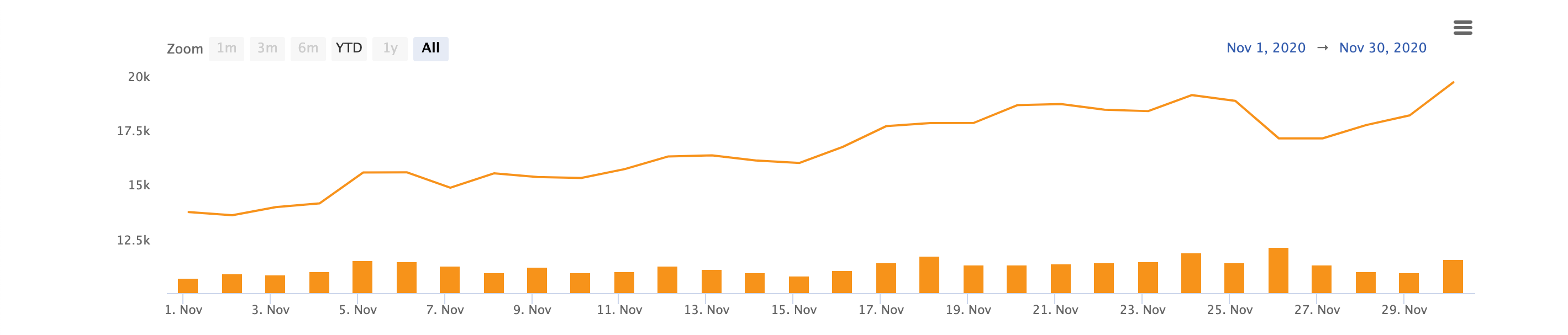
Six months after Halving, in November, the price almost doubled: the average closing price for Bitcoin was $16,665. The minimum price was $13.588 and the maximum price was $19.694.